How Old Is 20 in Dog Years?
A 20-year-old dog is about 96 human years if small, 114 if medium, 132 if large and 150 if giant, according to the AVMA size-adjusted model; a 20-year-old dog is a geriatric canine centenarian by any measure.
How old is 20 in dog years? A small dog is about 96 in human years, a medium dog 114, a large dog 132 and a giant dog 150. Twenty is the top of the pawometer chart and a genuinely rare age. Almost every dog that reaches it is a toy breed, most often a Chihuahua, and even among Chihuahuas it is uncommon. A 20-year-old dog has outlived its average lifespan by six years or more and is the canine equivalent of someone approaching a hundredth birthday.
20 dog years in human years, by size
| Dog size | Typical weight | Human years | Life stage at 20 |
|---|---|---|---|
| Toy | under 10 lb | 96 | Geriatric |
| Small | 10–20 lb | 96 | Geriatric |
| Medium | 21–50 lb | 114 | Geriatric |
| Large | 51–90 lb | 132 | Geriatric |
| Giant | over 90 lb | 150 | Geriatric |
Science mode (UCSD DNA clock, any size): about 79 human years. Life stage follows the AAHA guidelines and the average lifespan for each size.
What it means for a dog to reach 20
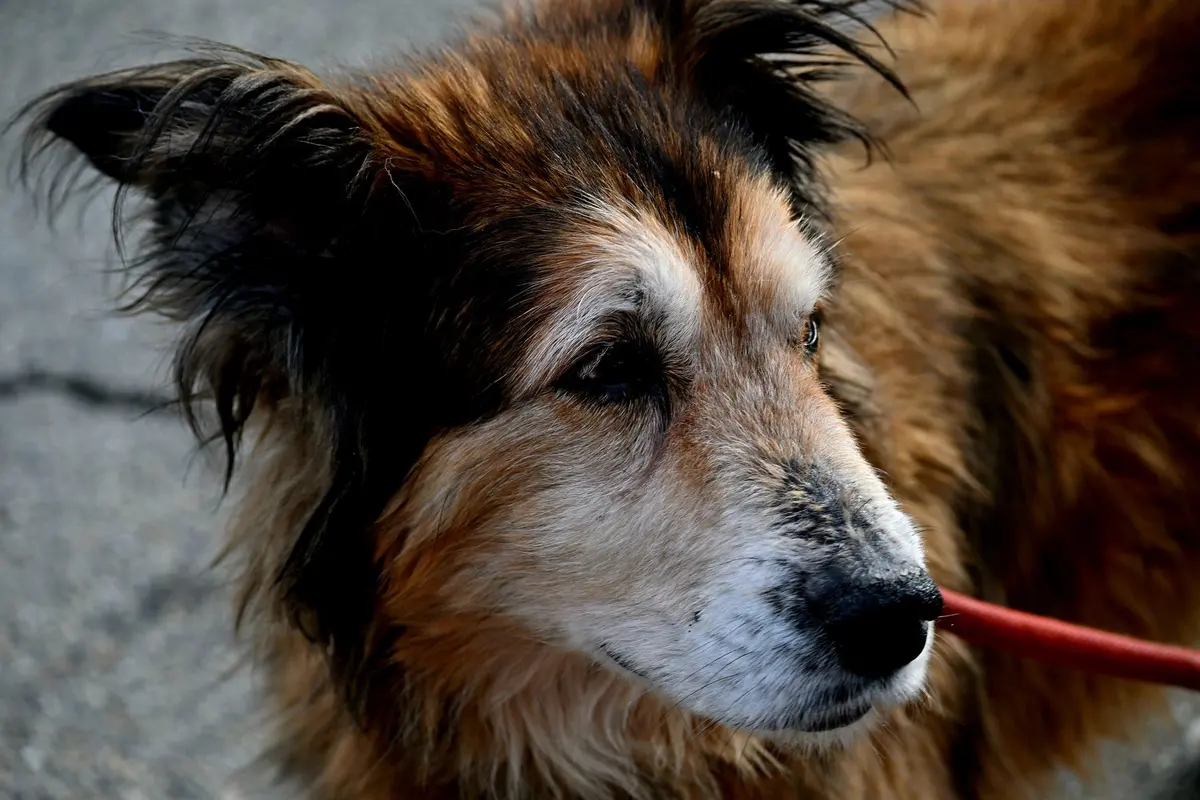
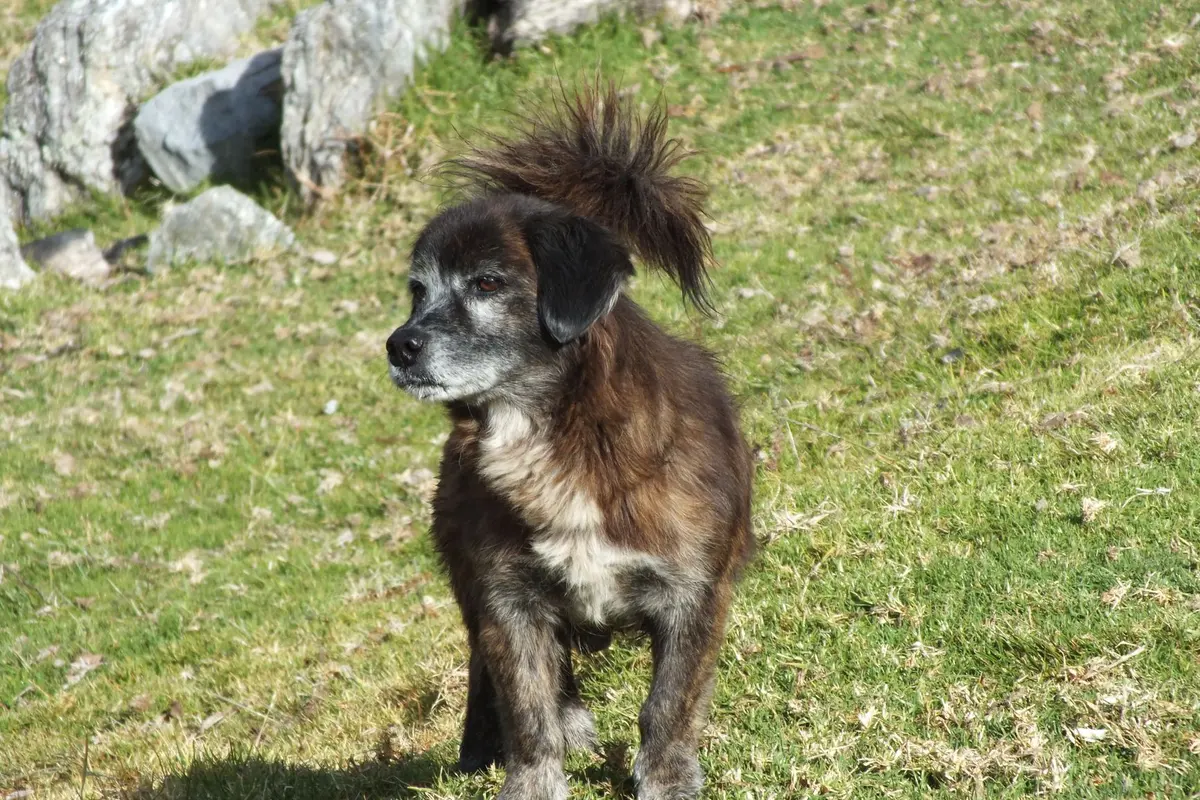
Every 20-year-old dog is geriatric under the AAHA guidelines, and by a wide margin: a toy breed is six years past its 14 year average, a small breed seven years past 13. Reaching 20 usually reflects small size, good genetics, lean body weight and decades of attentive care. Life now is quiet, slow and centered on comfort.
The AAHA canine life stage guidelines define geriatric as beyond the average lifespan for the dog's size, and at 20 in dog years every size is far past that point. The size-adjusted human ages are 96 for toy and small dogs, 114 for medium, 132 for large and 150 for giant, though in practice the last three are theoretical.
A 20-year-old dog's day is built around a handful of needs:
- Warmth and a soft bed the dog can reach without climbing.
- Small, frequent meals it actually wants to eat, warmed and sometimes hand fed.
- Help with bathroom trips, grooming and cleaning up accidents.
- A calm, unchanging environment, since sight and hearing are mostly gone.
- Company. Old dogs still know who you are by scent and touch.
Vet care shifts to regular medication reviews and a shared honest assessment of quality of life.
The health reality of a 20-year-old dog
A 20-year-old dog is almost certainly living with kidney disease, heart disease, cognitive dysfunction and arthritis, and possibly a tumor being left alone. Care is palliative in the best sense: relieve pain and nausea, keep the dog eating and hydrated, and keep it warm, clean and close to its people.
At 96 to 150 in human years, a 20-year-old dog is in the last chapter, and the medicine matches.
What good care looks like at 20 dog years in human years:
- Kidneys: a renal diet, anti-nausea and appetite medication, and subcutaneous fluids at home for a Chihuahua or Toy Poodle with advanced disease.
- Heart: continued medication; watch for breathing faster than 30 breaths a minute at rest.
- Pain: medication chosen with kidney function in mind, plus a heated bed, gentle massage and no stairs.
- Brain: night waking and disorientation are managed with a night light, a covered bed and medication where needed.
- Weight: weekly weighing on a kitchen scale; loss of 5 percent in a month means the plan needs adjusting.
Sudden collapse, a seizure or a full day without eating are reasons to call the vet the same day.
140 versus 96: three answers for 20 in dog years
The seven rule gives 140, which is absurd for the 5 lb Chihuahua that typically reaches 20 and which the AVMA size-adjusted model places at 96. The full size-adjusted range is 96 to 150, and the UCSD epigenetic clock gives about 79, having flattened almost completely.
The AVMA explains that dogs do the equivalent of 24 years of human maturing in their first two years and then age at four to seven human years per calendar year depending on size. That produces 96, 114, 132 and 150 at 20. Kraus et al. (2013) showed why only the smallest dogs reach this age: across breeds, each 4.4 lb of adult body mass shortens expected lifespan by about a month, and larger dogs age at a faster rate.
The molecular estimate of 79 is from Wang et al. (2020), who found canine DNA methylation follows 16 ln(age) + 31 relative to humans. The logarithmic curve gains barely a point a year by now, so a 20-year-old dog and a 15-year-old dog are only five epigenetic years apart. Pawometer shows this science mode number beside the practical size-adjusted answer so both stories are visible.
Nearby ages on the chart
| Dog’s age | Small 10–20 lb | Medium 21–50 lb | Large 51–90 lb | Giant over 90 lb | DNA clock |
|---|---|---|---|---|---|
| 1 year | 15 | 15 | 15 | 15 | 31 |
| 2 years | 24 | 24 | 24 | 24 | 42 |
| 3 years | 28 | 29 | 30 | 31 | 49 |
| 4 years | 32 | 34 | 36 | 38 | 53 |
| 5 years | 36 | 39 | 42 | 45 | 57 |
| 6 years | 40 | 44 | 48 | 52 | 60 |
| 7 years | 44 | 49 | 54 | 59 | 62 |
| 8 years | 48 | 54 | 60 | 66 | 64 |
| 9 years | 52 | 59 | 66 | 73 | 66 |
| 10 years | 56 | 64 | 72 | 80 | 68 |
| 11 years | 60 | 69 | 78 | 87 | 69 |
| 12 years | 64 | 74 | 84 | 94 | 71 |
| 13 years | 68 | 79 | 90 | 101 | 72 |
| 14 years | 72 | 84 | 96 | 108 | 73 |
| 15 years | 76 | 89 | 102 | 115 | 74 |
| 16 years | 80 | 94 | 108 | 122 | 75 |
| 17 years | 84 | 99 | 114 | 129 | 76 |
| 18 years | 88 | 104 | 120 | 136 | 77 |
| 19 years | 92 | 109 | 126 | 143 | 78 |
| 20 years | 96 | 114 | 132 | 150 | 79 |
See the full dog years chart (1–20 years, five sizes) →
Frequently asked questions
Can a dog really live to 20?
Yes, though it is rare. Toy breeds, especially Chihuahuas, occasionally reach 20, and the oldest verified dogs have lived beyond 25. For medium, large and giant breeds, 20 is essentially unheard of.
How old is 20 in dog years for a Chihuahua?
A 20-year-old Chihuahua is about 96 in human years as a toy breed. Chihuahuas average 14 to 16 years, so a 20-year-old has outlived its typical lifespan by four to six years and is deep in the geriatric stage.
What should I focus on with a 20-year-old dog?
Comfort, appetite and companionship. Keep pain and nausea controlled with your vet, feed small warmed meals, keep the dog warm and clean, maintain a fixed routine, and use a quality of life scale honestly so the last chapter is a gentle one.
Medically reviewed by our reviewing veterinarian, DVM · September 2026 Formulas, life stages and health notes follow AVMA, AKC and AAHA guidance. How we review · Not a substitute for veterinary advice.