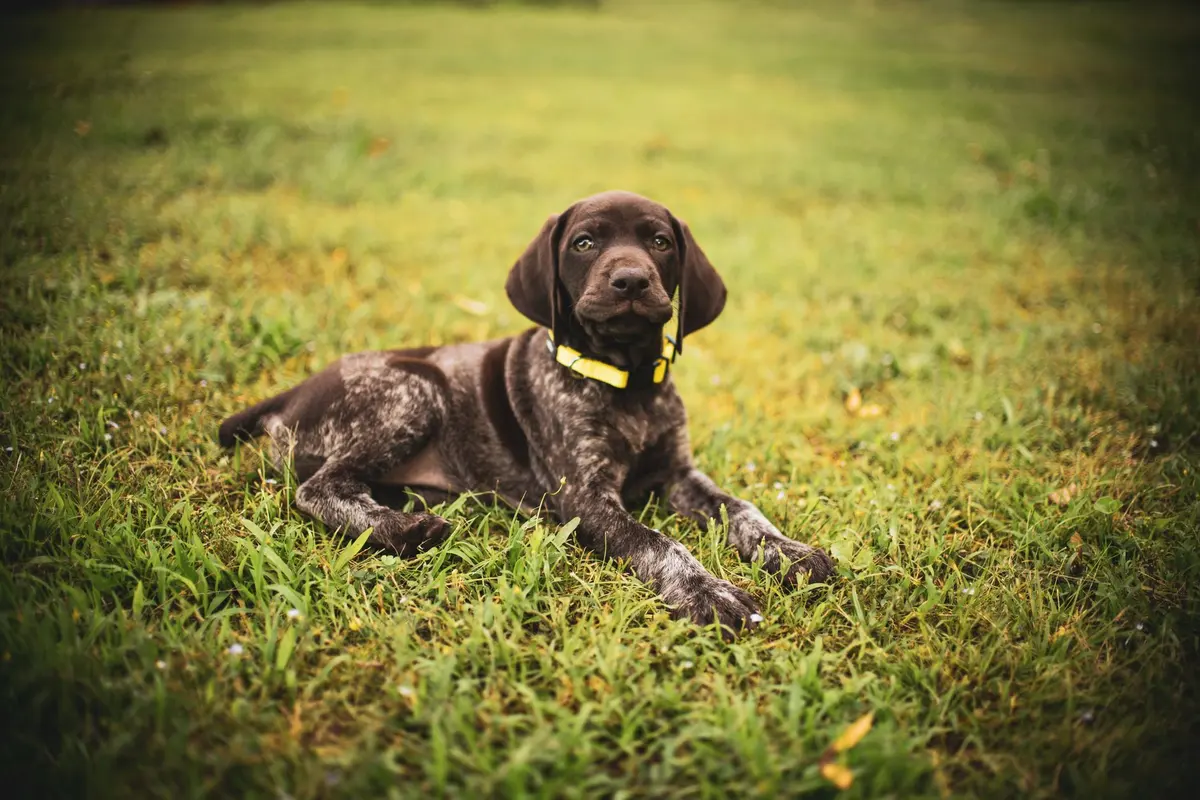
4-Month-Old Puppy in Human Years
A 4 month old puppy is about 7 human years old (6.7 on the size-adjusted model), the same for every breed size: a first grader finishing its vaccine series and losing baby teeth in earnest.
A 4 month old puppy in human years is about 7, or 6.7 if you want the exact figure. At sixteen weeks a puppy is finishing its DHPP vaccine series, is usually rabies vaccinated, and is deep into teething as the adult incisors replace the baby ones. The socialization window is closing this month, and the puppy's adult personality is beginning to show. Breed size does not change the number yet; every 4-month-old counts as about 7.
What a 4-month-old puppy is going through
| Age | Human years | Milestones at this age |
|---|---|---|
| 4 months (~17 weeks) | 6.7 | Baby teeth start falling out · Third DHPP + rabies vaccine · Socialization window closing (14–16 weeks) |
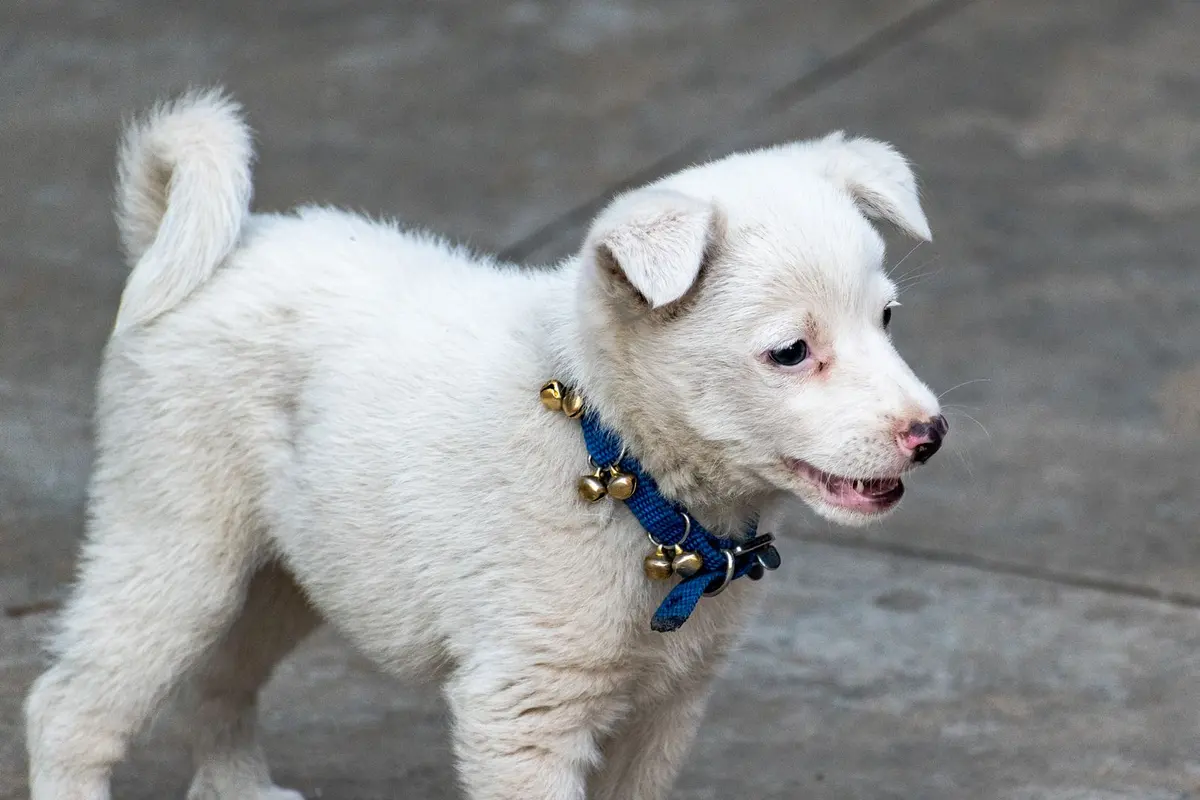
What a 16-week-old puppy is going through
At 4 months a puppy is a third of the way through the AAHA puppy stage and at the tail end of the socialization period. It is bolder, more independent and more distractible than it was a month ago, and its first fear period may show up. Consistent, gentle training matters more than ever.
The AAHA life stage guidelines run puppyhood from birth to one year, and since the AVMA size-adjusted model counts that first year as 15 human years, 4 month dog years work out to about 6.7 human years.
Focus areas for a 4-month-old:
- Finish socialization: new people, calm dogs, novel surfaces and sounds, all paired with food.
- Begin loose-leash walking and a reliable recall in a safe fenced area.
- Practice being alone for gradually longer periods to prevent separation anxiety.
- Puppy class graduation and, once the final vaccine takes effect, careful visits to busier places.
A Border Collie or Belgian Malinois puppy at this age needs mental work daily or it will find its own.
Teething, final vaccines and growth at 4 months
Sixteen weeks is peak teething: the adult incisors are in or arriving, premolars follow, and the canines will come at 5 to 6 months. The third DHPP vaccine is due at 14 to 16 weeks and rabies by 16, after which a puppy is considered protected. Large breed puppies are growing at their fastest rate now.
A 4 month old puppy in human years is about 7, and the mouth is the story of this month. Baby teeth fall out as the 42 adult teeth come in between 3 and 7 months, with all of them usually present by 6 to 7 months. Bleeding gums, chewing and a brief loss of appetite are normal.
Health checklist at 4 month dog years:
- Vaccines: final DHPP at 14 to 16 weeks and rabies at 12 to 16 weeks; ask about leptospirosis, Bordetella and Lyme based on your area.
- Retained baby teeth: common in toy breeds like Yorkies and Chihuahuas; if a baby canine is still there when the adult one erupts, it may need extraction.
- Growth: large and giant breeds put on weight fastest between 3 and 6 months; keep them lean to protect joints.
- Spay and neuter: begin the conversation now, since timing is often delayed for large breeds.
Why isn't a 4-month-old puppy 2.3 human years?
Multiplying 4 months by seven gives about 2.3 human years, but a 16-week-old puppy runs, plays, learns commands and is losing its baby teeth, which is the profile of a 6 or 7-year-old child. The size-adjusted model gives 6.7, and no epigenetic estimate is reported for puppies under a year.
The AVMA describes the seven rule as a myth that fails worst in the first year, when dogs pass through the equivalent of human infancy and early childhood in months. Spreading the first year's 15 human years evenly gives 1.25 per month, so 4 month dog years equal about 6.7 human years, rounded to 7.
The epigenetic formula from Wang et al. (2020), 16 ln(age) + 31, is designed for dogs from their first birthday onward, and pawometer reports it only from age one. Size also plays no role yet: Kraus et al. (2013) found that body mass shortens lifespan and speeds adult aging, but that effect shows up after growth ends, not in a 4-month-old. Right now the Great Dane puppy and the Pug puppy are the same age in every sense that matters.
Frequently asked questions
How old is a 4 month old puppy in human years?
About 7 human years, or 6.7 on the size-adjusted model. Every breed size gets the same figure at this age, because the size-related differences in aging begin only after the second birthday.
Is a 4-month-old puppy fully vaccinated?
Usually by the end of this month. The final DHPP vaccine is given at 14 to 16 weeks and rabies at 12 to 16, and protection is considered complete about two weeks after the last shot.
Why is my 4-month-old puppy suddenly scared of things?
Many puppies go through a fear period between 8 and 16 weeks, and some show it right around 4 months. Do not force the puppy toward what scares it; let it observe from a distance, reward calm curiosity, and it will usually pass in a week or two.
Medically reviewed by our reviewing veterinarian, DVM · September 2026 Formulas, life stages and health notes follow AVMA, AKC and AAHA guidance. How we review · Not a substitute for veterinary advice.