3-Month-Old Puppy in Human Years
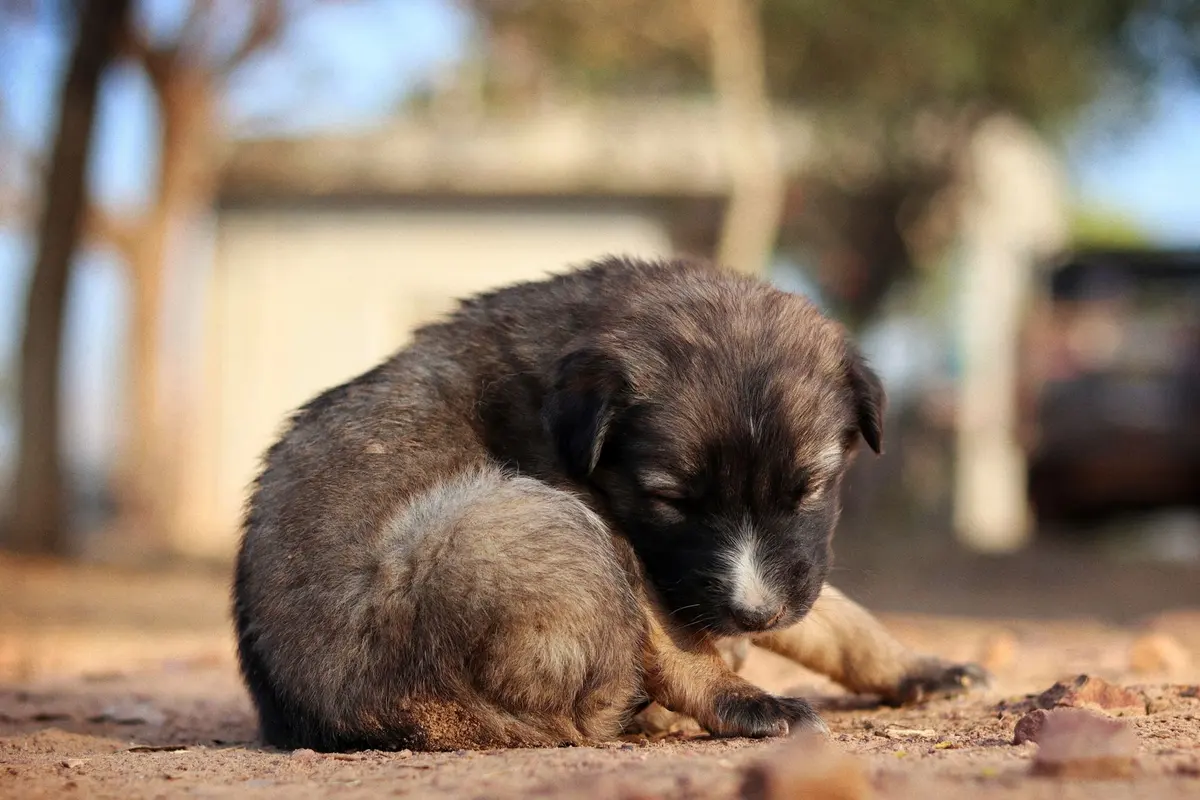
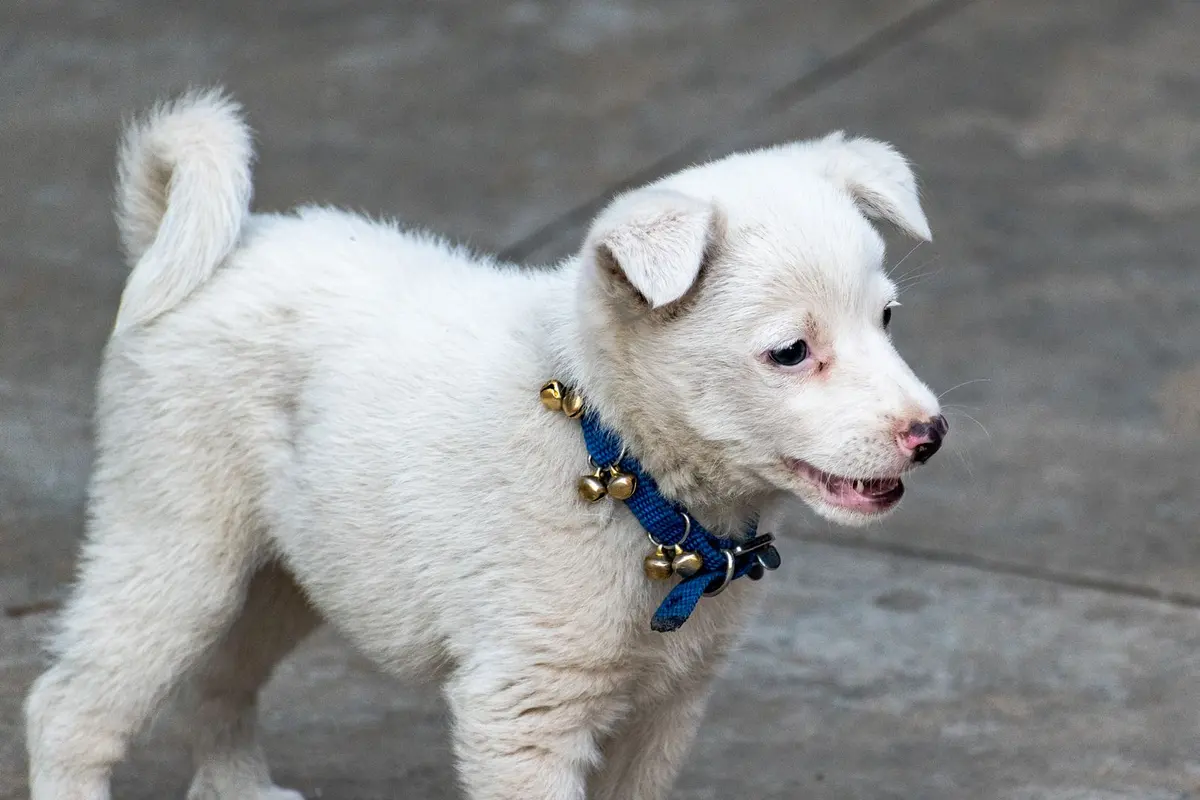
A 3 month old puppy is about 5 human years old on the size-adjusted model, the same for every breed size: a kindergartner who is starting to lose baby teeth and is in the final weeks of the socialization window.
A 3 month old puppy in human years is about 5. At twelve weeks your puppy is the canine version of a kindergartner: curious, energetic, teachable and starting to lose its baby teeth. Size does not change the number yet, because the first year counts as 15 human years for every breed and the size-based split begins only after age two. Three months is also when the second DHPP vaccine and often the rabies shot are due, and the socialization window is closing fast.
What a 3-month-old puppy is going through
| Age | Human years | Milestones at this age |
|---|---|---|
| 3 months (~13 weeks) | 5 | Second DHPP vaccine · Socialization window wide open · Sleeps 18–20 hours a day |
Where a 12-week-old puppy is in development
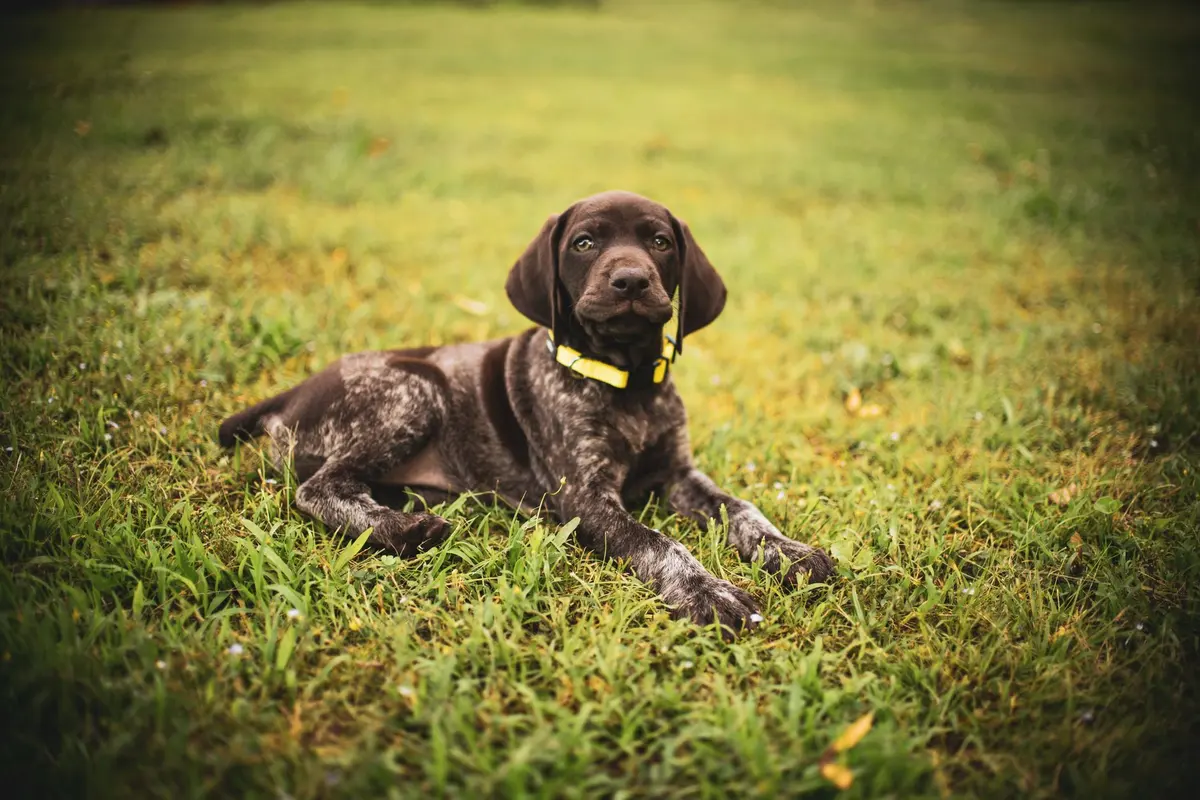
At 3 months a puppy is in the middle of the AAHA puppy stage and near the end of the critical socialization period, which closes at about 14 to 16 weeks. Everything it meets calmly now, from vacuum cleaners to vet tables, will be easier for life, which makes this month the highest leverage time in dog ownership.
The AAHA life stage guidelines define puppyhood as birth to one year, and the AVMA size-adjusted model gives that first year 15 human years, so 3 month dog years equal 5 human years.
Priorities for a 3-month-old puppy:
- Meet many friendly people of different ages and appearances, always with treats.
- Experience car rides, stairs, grooming tools, and being left alone for short stretches.
- Attend a puppy class that requires proof of vaccination.
- Keep training sessions to a few minutes and end on success; a 5-year-old's attention span is short.
A 3-month-old still needs 18 hours of sleep a day. Overtired puppies bite more, so enforce naps.
Teething, vaccines and growth at 3 months
At 12 weeks the adult incisors start pushing out the baby teeth, so expect chewing and the occasional tiny tooth on the floor. The second DHPP vaccine is due at 10 to 12 weeks, rabies at 12 to 16 weeks, and the final DHPP at 14 to 16. Growth is fastest now, especially in large and giant breeds.
A 3 month old puppy in human years is about 5, and like a kindergartner it is losing teeth. Adult incisors come in at 3 to 5 months, canines at 5 to 6 months and the full set of 42 adult teeth at 6 to 7 months. Frozen wet washcloths and rubber chews help.
What to schedule at 3 month dog years:
- Vaccines: second DHPP at 10 to 12 weeks and rabies at 12 to 16 weeks, then the third DHPP at 14 to 16 weeks.
- Prevention: start monthly heartworm, flea and tick prevention if not already begun.
- Food: three meals a day of puppy food; large breed puppies need a formula that limits calcium and calories to protect growing joints.
- Weight: a Labrador puppy may gain 2 lb a week now; a Yorkie may gain a few ounces.
Small breeds will be fully grown by 9 to 12 months, large breeds by 12 to 18 and giants by 18 to 24.
Why 3 months is 5 human years and not 2
The seven rule would make a 3-month-old puppy under 2 human years, but a 12-week-old already runs, plays, learns commands and is losing teeth, a profile far closer to a 5-year-old child. The size-adjusted model spreads the first year's 15 human years across 12 months, which gives exactly 5 at three months.
The AVMA has long said the multiply by seven rule is a myth, and it is most misleading for puppies. Dogs compress the equivalent of human infancy and early childhood into a few months: by 12 weeks a puppy has weaned, become mobile, started losing baby teeth and formed its core social attitudes. Fifteen human years divided across the first year is 1.25 per month, so 3 month dog years come out to 5 human years for every size.
The epigenetic clock published by Wang et al. (2020) in Cell Systems, human age = 16 ln(dog age) + 31, was derived from methylation in Labrador Retrievers and is most useful from the first birthday onward, so pawometer reports it only for dogs aged one year and up. For a 3-month-old, the practical answer is 5.
Frequently asked questions
How old is a 3 month old puppy in human years?
About 5 human years. The number is the same for toy, small, medium, large and giant breeds because size only begins to affect a dog's human age equivalent after its second birthday.
Is 3 months too late to socialize a puppy?
No, but the window is closing. The critical socialization period ends around 14 to 16 weeks, so the next three or four weeks are the most valuable time to introduce new people, places, sounds and gentle handling.
When do 3-month-old puppies stop biting?
Mouthing peaks around 3 to 4 months during teething and usually fades by 6 months as adult teeth come in and bite inhibition is learned. Redirect to chew toys, end play when teeth touch skin, and make sure the puppy is getting enough sleep.
Medically reviewed by our reviewing veterinarian, DVM · September 2026 Formulas, life stages and health notes follow AVMA, AKC and AAHA guidance. How we review · Not a substitute for veterinary advice.