How Old Is 1 in Dog Years?
A 1-year-old dog is about 15 in human years whether it is small, medium, large or giant, according to the AVMA size-adjusted model, because the first year covers the same leap from puppy to young adult in every breed.
If you are asking how old is 1 in dog years, the answer is the same for a Chihuahua and a Great Dane: roughly 15 human years. The first year of a dog's life packs in teething, puberty, full skeletal growth in smaller breeds and the start of adult behavior, which is why the size-adjusted model gives every dog 15 at this birthday. The differences by size begin after year two, when large and giant dogs start aging faster than small ones.
1 dog years in human years, by size
| Dog size | Typical weight | Human years | Life stage at 1 |
|---|---|---|---|
| Toy | under 10 lb | 15 | Young adult |
| Small | 10–20 lb | 15 | Young adult |
| Medium | 21–50 lb | 15 | Young adult |
| Large | 51–90 lb | 15 | Young adult |
| Giant | over 90 lb | 15 | Young adult |
Science mode (UCSD DNA clock, any size): about 31 human years. Life stage follows the AAHA guidelines and the average lifespan for each size.
Is a 1-year-old dog still a puppy?
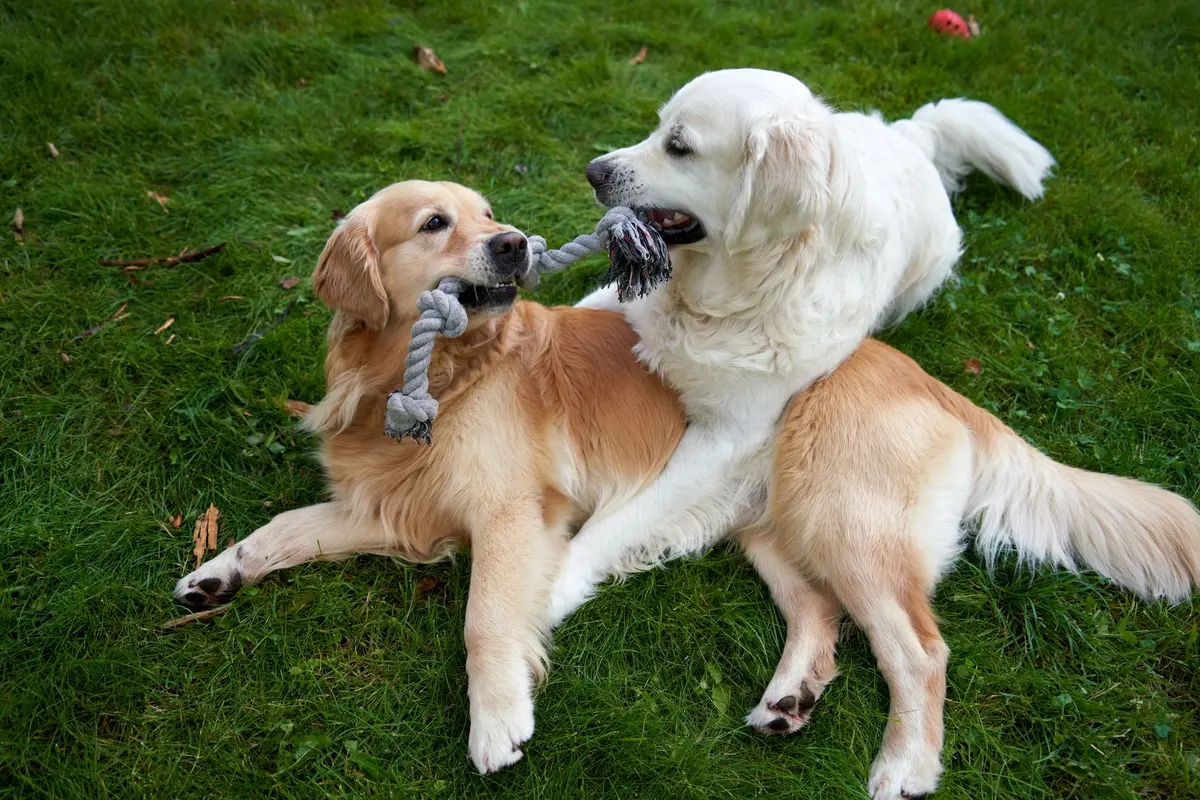
By the AAHA canine life stage guidelines a dog turns from puppy to young adult at its first birthday, so a 1-year-old is a brand new young adult. Small breeds are physically finished growing, while large and giant breeds may keep filling out for another six to twelve months.
The AAHA 2019 life stage guidelines define the puppy stage as birth to one year and the young adult stage as one to three years. That fits the 15 human years the AVMA size-adjusted model assigns to a 1-year-old dog: a teenager with adult teeth, adult hormones and a still developing brain.
- Small breeds under 20 lb are at or near full adult size by 1.
- Large breeds keep growing until 12 to 18 months.
- Giant breeds such as Mastiffs may not finish until 24 months.
Care at this age means finishing the transition to adult food (later for giants), keeping up training through adolescence and scheduling the first adult wellness exam.
What changes at 1 in dog years?
At 1 the frantic puppy growth slows down and personality settles, but adolescence is still in full swing. Expect a second round of boundary testing, a strong drive to chew and roam, and the first signs of adult energy levels, which vary a lot between a Border Collie and a Basset Hound.
Behavior is the biggest change at this age. Canine adolescence runs from about 6 to 18 months, so a 1-year-old dog sits right in the middle of it. Recall can get worse before it gets better, and intact dogs of both sexes become sexually mature.
On the health side, 1 in dog years is when most veterinarians:
- Give the one-year booster for DHPP and rabies.
- Confirm the dog is on year-round heartworm and flea prevention.
- Check hips and elbows in large breeds prone to dysplasia.
- Discuss spay or neuter timing, which many vets now delay in large breeds until growth plates close.
Because all sizes score 15 at this birthday, size does not change the human age yet, but it does change how much longer your dog will keep growing.
Why is a 1-year-old dog 15 and not 7?
The old multiply by seven rule would make a 1-year-old dog a 7-year-old child, which does not match a sexually mature animal with a full set of adult teeth. The AVMA model gives the first year 15 human years, and the UCSD epigenetic clock puts a 1-year-old dog at about 31.
The seven year rule dates from mid twentieth century pamphlets that simply divided a 70 year human lifespan by a 10 year dog lifespan. The AVMA explains that dogs mature much faster in year one, then slow down, so a flat multiplier fails at both ends.
The epigenetic study by Wang and colleagues (Cell Systems, 2020) went further. Using DNA methylation patterns in Labrador Retrievers, they fitted the formula 16 times the natural log of age plus 31, which returns 31 human years for a 1-year-old dog. That number describes molecular age, not behavior, which is why pawometer shows it as a separate science mode. For everyday questions like how old is 1 in dog years, 15 is the practical answer.
Nearby ages on the chart
| Dog’s age | Small 10–20 lb | Medium 21–50 lb | Large 51–90 lb | Giant over 90 lb | DNA clock |
|---|---|---|---|---|---|
| 1 year | 15 | 15 | 15 | 15 | 31 |
| 2 years | 24 | 24 | 24 | 24 | 42 |
| 3 years | 28 | 29 | 30 | 31 | 49 |
See the full dog years chart (1–20 years, five sizes) →
Frequently asked questions
Is 1 in dog years the same for every breed?
Yes, the size-adjusted model gives 15 human years to every 1-year-old dog. Breed size only starts to matter after the second birthday, when large dogs begin gaining six human years per calendar year and small dogs gain four.
What is 1 dog years in human years according to science?
The UCSD epigenetic clock returns about 31 human years for a 1-year-old dog. It measures DNA methylation rather than life stage, so it runs high in young dogs and low in old ones compared with the AVMA chart.
Should a 1-year-old dog still eat puppy food?
Small and medium breeds can usually switch to adult food around their first birthday. Large and giant breeds are often kept on a large breed growth formula until 15 to 24 months, so ask your vet before changing.
Medically reviewed by our reviewing veterinarian, DVM · September 2026 Formulas, life stages and health notes follow AVMA, AKC and AAHA guidance. How we review · Not a substitute for veterinary advice.