How Old Is 18 in Dog Years?
An 18-year-old dog is about 88 human years if small, 104 if medium, 120 if large and 136 if giant, according to the AVMA size-adjusted model; an 18-year-old dog is geriatric and has outlived its average lifespan by at least four years.
How old is 18 in dog years? A small dog is about 88 in human years, a medium dog 104, a large dog 120 and a giant dog 136. Eighteen is an exceptional age. In practice it is reached by toy breeds such as Chihuahuas, Pomeranians, Maltese and Toy Poodles, by some small terriers and Dachshunds, and very rarely by anything larger. Every 18-year-old dog is geriatric, and most are living with several age related conditions that are being carefully managed.
18 dog years in human years, by size
| Dog size | Typical weight | Human years | Life stage at 18 |
|---|---|---|---|
| Toy | under 10 lb | 88 | Geriatric |
| Small | 10–20 lb | 88 | Geriatric |
| Medium | 21–50 lb | 104 | Geriatric |
| Large | 51–90 lb | 120 | Geriatric |
| Giant | over 90 lb | 136 | Geriatric |
Science mode (UCSD DNA clock, any size): about 77 human years. Life stage follows the AAHA guidelines and the average lifespan for each size.
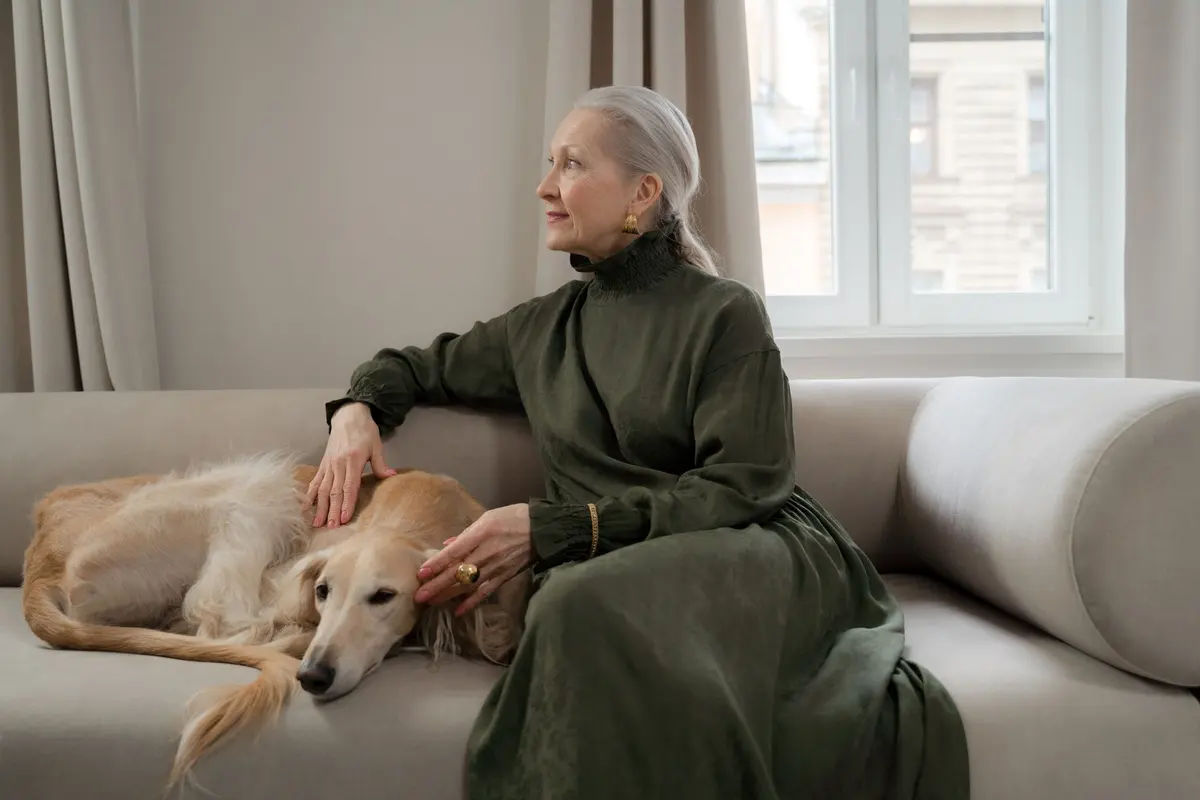
An 18-year-old dog and the geriatric stage
Under the AAHA guidelines every 18-year-old dog is geriatric, since the stage begins once a dog passes its size's average lifespan of 14, 13, 12, 11 or 8.5 years. An 18-year-old toy breed has outlived its average by four years and a small breed by five. Care is about comfort and predictability.
The AAHA canine life stage guidelines treat the years beyond average lifespan as the geriatric stage. At 18 in dog years the size-adjusted human ages are 88 for toy and small dogs, 104 for medium, 120 for large and 136 for giant.
What an 18-year-old dog needs day to day:
- A warm, low bed in a quiet room, and a second one wherever the family spends the evening.
- Food and water within a few steps, and sometimes hand feeding for a dog with poor vision or a sore mouth.
- Frequent bathroom breaks, since bladder control weakens; washable pads indoors are a kindness, not a failure.
- Gentle grooming, because old dogs stop grooming themselves and mats cause pain.
Plan vet visits every two to three months, mostly to fine tune medication and weigh the dog. A Chihuahua or Maltese at 18 can still have good months ahead with this kind of care.
What health problems are typical at 18?
At 18 nearly every dog has chronic kidney disease, heart disease, cognitive dysfunction or advanced arthritis, and most have more than one. Muscle loss makes the dog look thin even when eating, deafness and blindness are the rule, and sleep dominates the day. The job is to keep the dog comfortable, fed and reassured.
An 18-year-old dog is roughly 88 to 136 in human years. The pattern of illness at 18 dog years in human years:
- Kidneys: most 18-year-old small dogs have some degree of kidney disease; a renal diet and home fluids are standard.
- Heart: mitral valve disease in Chihuahuas, Pomeranians and Cavaliers is usually well advanced and medicated.
- Brain: confusion, night waking, staring and anxiety from cognitive dysfunction are nearly universal; routine, night lights and medication help.
- Body: sarcopenia, the loss of muscle with age, makes rising and walking harder; short frequent movement slows it.
- Mouth: missing and infected teeth are common; soft food and pain control keep the dog eating.
Sudden changes, a seizure, collapse, or refusing food for a day, are emergencies at this age. Gradual changes are what you track with your vet.
126 versus 88: the models behind 18 in dog years
The seven rule gives 126 for an 18-year-old dog, wildly overstating the Chihuahuas and Maltese that actually reach this age, which the AVMA model places at 88. The size-adjusted chart spans 88 to 136, and the UCSD epigenetic clock returns about 77, having almost flattened out.
The AVMA explains that the seven rule fails because dogs do most of their maturing in two years and then age at a size dependent rate. The size-adjusted model adds four human years per year for small dogs, five for medium, six for large and seven for giant after age two, which produces 88, 104, 120 and 136 at 18. Kraus et al. (2013) found that large dogs age faster, with each 4.4 lb of mass costing about a month of expected lifespan, which is why an 18-year-old dog almost always weighs under 20 lb.
The 77 figure is from Wang et al. (2020), who derived 16 ln(age) + 31 from DNA methylation in Labradors. The curve is nearly flat by now, adding about one epigenetic year per calendar year. Pawometer displays it as science mode for comparison rather than as a replacement.
Nearby ages on the chart
| Dog’s age | Small 10–20 lb | Medium 21–50 lb | Large 51–90 lb | Giant over 90 lb | DNA clock |
|---|---|---|---|---|---|
| 1 year | 15 | 15 | 15 | 15 | 31 |
| 2 years | 24 | 24 | 24 | 24 | 42 |
| 3 years | 28 | 29 | 30 | 31 | 49 |
| 4 years | 32 | 34 | 36 | 38 | 53 |
| 5 years | 36 | 39 | 42 | 45 | 57 |
| 6 years | 40 | 44 | 48 | 52 | 60 |
| 7 years | 44 | 49 | 54 | 59 | 62 |
| 8 years | 48 | 54 | 60 | 66 | 64 |
| 9 years | 52 | 59 | 66 | 73 | 66 |
| 10 years | 56 | 64 | 72 | 80 | 68 |
| 11 years | 60 | 69 | 78 | 87 | 69 |
| 12 years | 64 | 74 | 84 | 94 | 71 |
| 13 years | 68 | 79 | 90 | 101 | 72 |
| 14 years | 72 | 84 | 96 | 108 | 73 |
| 15 years | 76 | 89 | 102 | 115 | 74 |
| 16 years | 80 | 94 | 108 | 122 | 75 |
| 17 years | 84 | 99 | 114 | 129 | 76 |
| 18 years | 88 | 104 | 120 | 136 | 77 |
| 19 years | 92 | 109 | 126 | 143 | 78 |
| 20 years | 96 | 114 | 132 | 150 | 79 |
See the full dog years chart (1–20 years, five sizes) →
Frequently asked questions
Is 18 a record age for a dog?
No, but it is exceptional. Toy breeds occasionally reach 18 to 20, and the oldest verified dogs have lived past 25. For medium and large breeds 18 is extraordinarily rare, and it has essentially never been documented in giant breeds.
How old is 18 in dog years for a Maltese?
A Maltese is a toy breed, so an 18-year-old is about 88 in human years. Maltese average 12 to 15 years, meaning an 18-year-old has outlived the typical lifespan by several years and is deep in the geriatric stage.
How do I know when it is time for my 18-year-old dog?
Use a quality of life scale with your vet that tracks appetite, hydration, pain, hygiene, mobility, happiness and the balance of good and bad days. When bad days consistently outnumber good ones despite treatment, it is time to talk about a peaceful end.
Medically reviewed by our reviewing veterinarian, DVM · September 2026 Formulas, life stages and health notes follow AVMA, AKC and AAHA guidance. How we review · Not a substitute for veterinary advice.