How Old Is 16 in Dog Years?
A 16-year-old dog is about 80 human years if small, 94 if medium, 108 if large and 122 if giant, according to the AVMA size-adjusted model; a 16-year-old dog of any size is geriatric and well past its average lifespan.
How old is 16 in dog years? A small dog is about 80 in human years, a medium dog 94, a large dog 108 and a giant dog 122. Sixteen is a milestone that belongs mostly to toy and small breeds: Chihuahuas, Yorkies, Maltese, Toy Poodles and Dachshunds reach it fairly often, medium dogs occasionally, and large dogs rarely. Every 16-year-old dog is geriatric under the AAHA guidelines, having outlived its average lifespan by two to seven and a half years.
16 dog years in human years, by size
| Dog size | Typical weight | Human years | Life stage at 16 |
|---|---|---|---|
| Toy | under 10 lb | 80 | Geriatric |
| Small | 10–20 lb | 80 | Geriatric |
| Medium | 21–50 lb | 94 | Geriatric |
| Large | 51–90 lb | 108 | Geriatric |
| Giant | over 90 lb | 122 | Geriatric |
Science mode (UCSD DNA clock, any size): about 75 human years. Life stage follows the AAHA guidelines and the average lifespan for each size.

How far past average is a 16-year-old dog?
By the AAHA guidelines a dog is geriatric once it passes the average lifespan for its size. At 16 a toy breed is two years past average, a small breed three, a medium breed four, a large breed five and a giant breed seven and a half. Every one of them is a success story, and care should reflect that.
The AAHA canine life stage guidelines use average lifespans of 14, 13, 12, 11 and 8.5 years for toy, small, medium, large and giant dogs. At 16 in dog years the size-adjusted human ages are 80 for toy and small dogs, 94 for medium, 108 for large and 122 for giant.
For a geriatric dog this far past average, the care plan is simple and steady:
- Vet visits every three to four months, including bloodwork, blood pressure and a pain assessment.
- Medication for arthritis, heart or kidney disease given on schedule, with a pill organizer if there are several.
- Non-slip flooring everywhere the dog walks, and a bed it can get into without climbing.
- The same walk route each day, short enough that the dog is never exhausted.
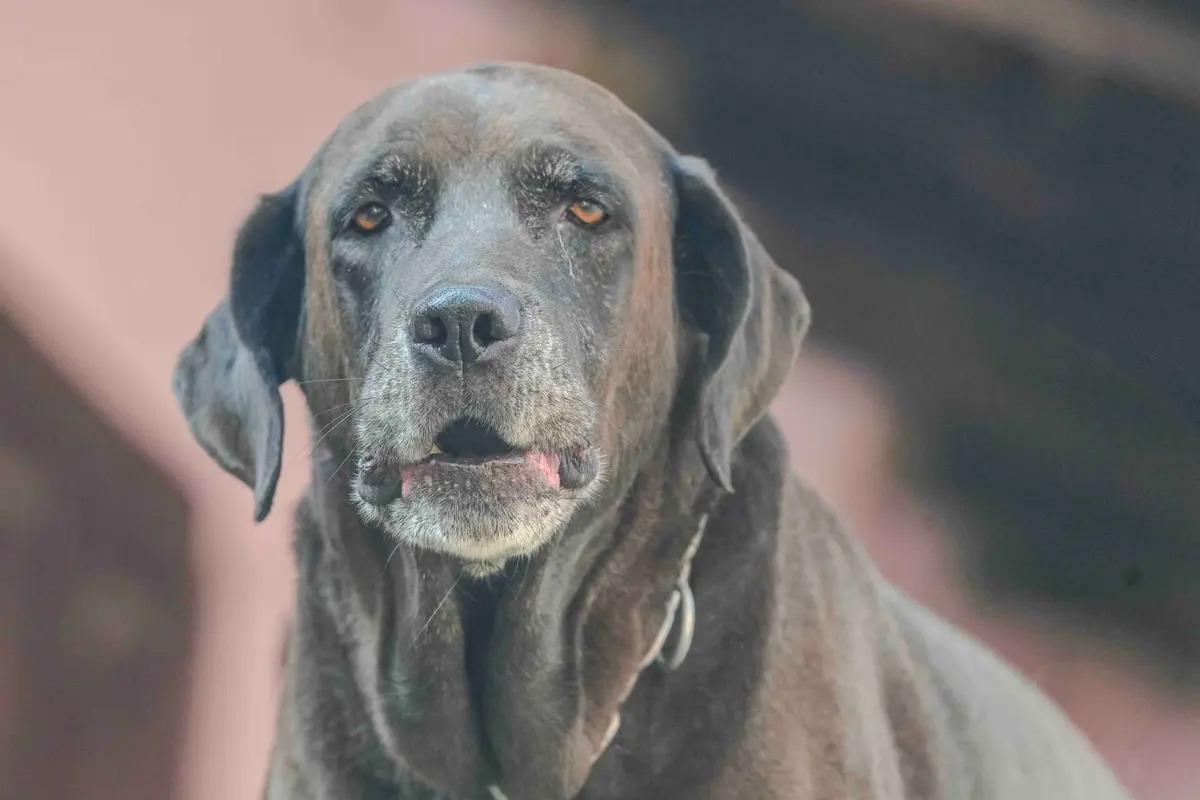
A 16-year-old Toy Poodle may still trot happily; a 16-year-old Beagle will likely need a harness with a handle for support.
What is normal for a dog at 16?
At 16 it is normal for a dog to sleep 18 hours a day, be partly deaf and partly blind, walk stiffly and be a little confused in the evening. It is not normal to refuse food, breathe fast at rest, cry at night or lose weight quickly. Those changes usually mean a treatable problem has appeared or an existing one needs adjusting.
A 16-year-old dog is roughly 80 to 122 in human years, and most are living with several conditions at once.
At 16 dog years in human years the priorities are:
- Kidney function: check bloodwork and urine every visit; many 16-year-old small dogs are on a kidney diet.
- Heart: count breaths while sleeping; more than 30 a minute in a Cavalier, Chihuahua or Pomeranian warrants a call.
- Cognition: sundowning, pacing and house soiling are common; a night light, a fixed routine and medication help.
- Teeth: a painful mouth is often why an old dog eats less; even at 16 a stable dog can have extractions.
- Mobility: a Yorkie or Maltese that stops jumping on the couch is telling you something about its joints.
Keep a simple diary of appetite, sleep, walks and accidents. Trends over weeks are far more useful to your vet than a single bad day.
112 or 80? The math behind 16 in dog years
The seven rule gives 112 for a 16-year-old dog, which is roughly the large breed answer but 32 years too high for the small breeds that actually reach this age. The AVMA model gives 80 to 122, and the UCSD epigenetic clock gives about 75, sitting just below the small dog figure.
The AVMA rejects the seven rule because dogs mature quickly in the first two years and then age at a rate tied to size. Its size-adjusted approach adds four, five, six or seven human years per calendar year after age two, which is why a 16-year-old Chihuahua is 80 while a hypothetical 16-year-old Great Dane would be 122. Kraus et al. (2013) showed that large dogs age faster, losing about a month of expected lifespan for every 4.4 lb, which is precisely why the dogs at a 16th birthday party are almost all small.
The epigenetic estimate of 75 is from Wang et al. (2020), whose formula 16 ln(age) + 31 describes DNA methylation and flattens in old age. It is a useful research tool and pawometer shows it as science mode, but the size-adjusted number better describes a 16-year-old dog's stage of life.
Nearby ages on the chart
| Dog’s age | Small 10–20 lb | Medium 21–50 lb | Large 51–90 lb | Giant over 90 lb | DNA clock |
|---|---|---|---|---|---|
| 1 year | 15 | 15 | 15 | 15 | 31 |
| 2 years | 24 | 24 | 24 | 24 | 42 |
| 3 years | 28 | 29 | 30 | 31 | 49 |
| 4 years | 32 | 34 | 36 | 38 | 53 |
| 5 years | 36 | 39 | 42 | 45 | 57 |
| 6 years | 40 | 44 | 48 | 52 | 60 |
| 7 years | 44 | 49 | 54 | 59 | 62 |
| 8 years | 48 | 54 | 60 | 66 | 64 |
| 9 years | 52 | 59 | 66 | 73 | 66 |
| 10 years | 56 | 64 | 72 | 80 | 68 |
| 11 years | 60 | 69 | 78 | 87 | 69 |
| 12 years | 64 | 74 | 84 | 94 | 71 |
| 13 years | 68 | 79 | 90 | 101 | 72 |
| 14 years | 72 | 84 | 96 | 108 | 73 |
| 15 years | 76 | 89 | 102 | 115 | 74 |
| 16 years | 80 | 94 | 108 | 122 | 75 |
| 17 years | 84 | 99 | 114 | 129 | 76 |
| 18 years | 88 | 104 | 120 | 136 | 77 |
See the full dog years chart (1–20 years, five sizes) →
Frequently asked questions
Is it rare for a dog to live to 16?
It is common for toy breeds, fairly common for small breeds, uncommon for medium breeds and rare for large breeds. Giant breeds almost never reach 16, since their average lifespan is about 8.5 years.
How old is 16 in dog years for a Jack Russell Terrier?
A Jack Russell weighs 13 to 17 lb, so a 16-year-old is about 80 in human years as a small breed. Jack Russells are known for longevity and 16 is a realistic age for a lean, healthy one.
Should I still vaccinate a 16-year-old dog?
Discuss it with your vet. Rabies vaccination is legally required in most US states regardless of age, but many vets use titer tests or extend intervals for other vaccines in very old dogs, balancing risk against the dog's health and exposure.
Medically reviewed by our reviewing veterinarian, DVM · September 2026 Formulas, life stages and health notes follow AVMA, AKC and AAHA guidance. How we review · Not a substitute for veterinary advice.