How Old Is 15 in Dog Years?
A 15-year-old dog is about 76 human years if small, 89 if medium, 102 if large and 115 if giant, according to the AVMA size-adjusted model; every 15-year-old dog is in the geriatric stage.
How old is 15 in dog years? A small dog is about 76 in human years, a medium dog 89, a large dog 102 and a giant dog 115. Fifteen is an age mostly reached by small and toy breeds, which average 13 and 14 years of life. A 15-year-old Labrador is the equivalent of a centenarian, and a 15-year-old giant breed would be nearly unprecedented. Whatever the size, every 15-year-old dog is geriatric and the focus is entirely on comfort and quality of life.
15 dog years in human years, by size
| Dog size | Typical weight | Human years | Life stage at 15 |
|---|---|---|---|
| Toy | under 10 lb | 76 | Geriatric |
| Small | 10–20 lb | 76 | Geriatric |
| Medium | 21–50 lb | 89 | Geriatric |
| Large | 51–90 lb | 102 | Geriatric |
| Giant | over 90 lb | 115 | Geriatric |
Science mode (UCSD DNA clock, any size): about 74 human years. Life stage follows the AAHA guidelines and the average lifespan for each size.
Life at 15: the geriatric stage for every size
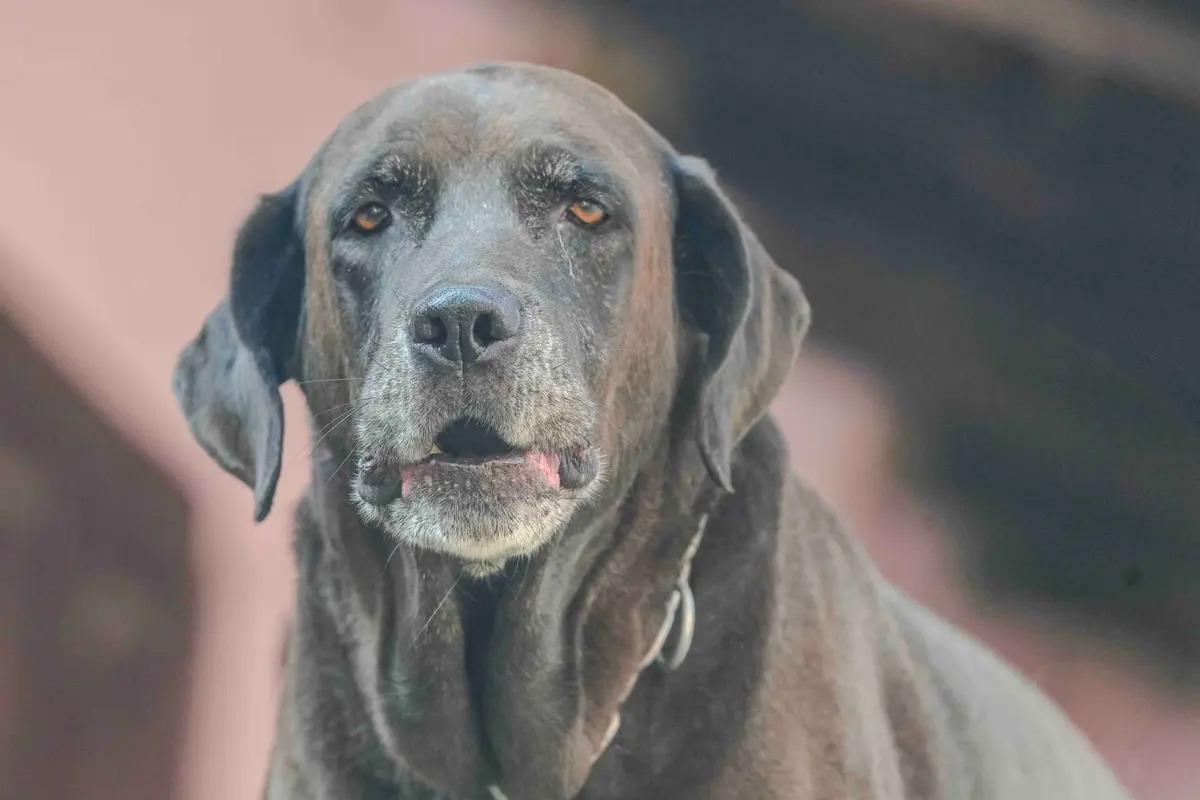
Under the AAHA guidelines all sizes are geriatric at 15, having outlived their average lifespan by at least a year. A 15-year-old toy breed is a year past average, a small breed two years, a medium breed three, a large breed four and a giant breed six and a half. Care centers on routine, pain control and daily pleasures.
The AAHA life stage guidelines place any dog past its size's average lifespan in the geriatric stage. At 15 in dog years the size-adjusted human ages are 76 for toy and small dogs, 89 for medium, 102 for large and 115 for giant.
What good geriatric care looks like for a 15-year-old:
- A vet visit every three to six months with bloodwork, urinalysis and blood pressure.
- Pain management reviewed at every visit, since almost all 15-year-olds have arthritis.
- Small, frequent meals of a palatable diet, warmed slightly to boost the scent for a dog with a dulled nose.
- Predictable routine, night lights, and a quiet safe space away from household commotion.
- Short, slow sniff walks. The nose still works and it keeps the mind engaged.
A 15-year-old Shih Tzu or Maltese may still be bright and eager; a 15-year-old Golden Retriever will need help rising and a great deal of patience.
Health concerns for a 15-year-old dog
At 15 most dogs live with two or three chronic conditions: kidney disease, heart disease, arthritis, dental disease and cognitive dysfunction are the usual combination. The practical questions are whether the dog is eating, sleeping comfortably, moving without obvious pain and still enjoying attention. Those four things define a good day.
A 15-year-old dog is roughly 76 to 115 in human years, so aging is now the main event rather than a background process.
At 15 dog years in human years, expect and manage:
- Kidney disease: very common in old Shih Tzus, Maltese and Miniature Schnauzers; a kidney diet and fluids can add comfortable months.
- Heart failure: medication controls symptoms well in most Cavaliers, Chihuahuas and Pomeranians.
- Cognitive dysfunction: affects a majority of dogs this old; diet, supplements, enrichment and medication all help.
- Dental pain: still worth treating even at 15 if the dog is stable, because a sore mouth ruins appetite.
- Deafness and blindness: common and manageable; use hand signals, scent cues and a fixed furniture layout.
Weight loss with a normal appetite suggests a metabolic problem; weight loss with poor appetite suggests pain or nausea. Both need a visit.
Is a 15-year-old dog really 105? The three models compared
The seven rule gives 105, which is about right for a large dog but 29 years too high for a Chihuahua. The AVMA size-adjusted model gives 76 to 115, and the UCSD epigenetic clock gives about 74, almost matching the small dog figure because its curve has flattened by this age.
The AVMA recommends against the seven rule because it ignores size and the rapid maturation of the first two years. Its size-adjusted chart gives 15 for year one, 24 for year two, then adds four human years per year for small dogs, five for medium, six for large and seven for giant. Kraus et al. (2013) supplied the biological reason: across breeds, each 4.4 lb of adult body mass costs about a month of expected lifespan, and larger dogs age at a faster rate, which is exactly why almost every 15-year-old dog you meet weighs under 30 lb.
The 74 figure comes from Wang et al. (2020), who found that DNA methylation in dogs follows 16 ln(age) + 31 relative to humans. By 15 that logarithmic curve gains barely a year per year, so pawometer labels it science mode rather than treating it as the practical answer.
Nearby ages on the chart
| Dog’s age | Small 10–20 lb | Medium 21–50 lb | Large 51–90 lb | Giant over 90 lb | DNA clock |
|---|---|---|---|---|---|
| 1 year | 15 | 15 | 15 | 15 | 31 |
| 2 years | 24 | 24 | 24 | 24 | 42 |
| 3 years | 28 | 29 | 30 | 31 | 49 |
| 4 years | 32 | 34 | 36 | 38 | 53 |
| 5 years | 36 | 39 | 42 | 45 | 57 |
| 6 years | 40 | 44 | 48 | 52 | 60 |
| 7 years | 44 | 49 | 54 | 59 | 62 |
| 8 years | 48 | 54 | 60 | 66 | 64 |
| 9 years | 52 | 59 | 66 | 73 | 66 |
| 10 years | 56 | 64 | 72 | 80 | 68 |
| 11 years | 60 | 69 | 78 | 87 | 69 |
| 12 years | 64 | 74 | 84 | 94 | 71 |
| 13 years | 68 | 79 | 90 | 101 | 72 |
| 14 years | 72 | 84 | 96 | 108 | 73 |
| 15 years | 76 | 89 | 102 | 115 | 74 |
| 16 years | 80 | 94 | 108 | 122 | 75 |
| 17 years | 84 | 99 | 114 | 129 | 76 |
See the full dog years chart (1–20 years, five sizes) →
Frequently asked questions
Is 15 old for a dog?
Yes. Every size is geriatric at 15, and only toy and small breeds reach it routinely. A 15-year-old medium dog has outlived its average by three years and a 15-year-old large dog by four.
How old is 15 in dog years for a Shih Tzu?
A Shih Tzu weighs 9 to 16 lb, so a 15-year-old is about 76 in human years as a toy or small breed. Shih Tzus commonly live 15 years or more, making this a respectable but not exceptional age.
How do I know if my 15-year-old dog is in pain?
Dogs rarely cry out; instead they move less, hesitate on stairs, lick a joint, pant at rest, become irritable or withdraw. If your dog does less than it did three months ago, assume pain is part of the reason and ask your vet for a trial of pain relief.
Medically reviewed by our reviewing veterinarian, DVM · September 2026 Formulas, life stages and health notes follow AVMA, AKC and AAHA guidance. How we review · Not a substitute for veterinary advice.